
In today’s competitive digital world, Branding for Small Businesses plays a major role in shaping customer perception and creating long-term business success. Customers are more likely to trust businesses that maintain a professional identity, clear messaging, and a consistent online presence. Understanding the Importance of Brand Identity helps businesses create credibility, improve recognition, and build stronger emotional connections with audiences.
Learning how to Build Customer Trust through effective branding strategies can significantly improve customer relationships and online reputation. From visual consistency and storytelling to customer experience and communication, strong Business Branding Strategies influence how people interact with a brand. Over time, Brand Trust and Customer Loyalty help businesses attract repeat customers, improve engagement, and stand out in competitive markets.
What is Branding?
Branding is the process of creating a unique identity for a business. It includes:
- logo design
- brand colors
- typography
- communication style
- website aesthetics
- customer experience
- social media presence
- overall business personality
Many people think branding is only about creating a logo, but it goes much deeper. It influences how customers feel and think about a business.
Strong branding helps customers:
- recognize a business easily
- remember the brand
- develop trust
- feel connected emotionally
- Choose the brand over competitors
A professional and consistent brand identity improves confidence and creates a stronger business reputation.
Why Customer Trust Matters
Customer trust is one of the most valuable assets any business can build. Without trust, customers hesitate to:
- make purchases
- share personal information
- Recommend the business
- become repeat buyers
Businesses with strong customer trust often experience:
- higher customer loyalty
- better online reputation
- increased sales
- stronger word-of-mouth marketing
- improved long-term growth
Trust significantly influences customer decisions, especially in online businesses where people cannot physically interact with products or services before purchasing.

First Impressions Shape Customer Perception
Customers form opinions about a business within seconds. Branding strongly affects these first impressions.
When customers visit:
- a website
- Instagram profile
- Facebook page
- online store
They immediately evaluate:
- professionalism
- visual quality
- consistency
- trustworthiness
Poor branding often creates doubt and reduces credibility.
For example:
- low-quality logos
- inconsistent colors
- outdated websites
- poor design
- unclear messaging
can make businesses appear unprofessional.
On the other hand, modern and professional branding creates confidence and improves customer perception instantly.
Consistency Builds Brand Trust
Consistency is one of the most important branding principles.
Customers trust brands that appear consistent across all platforms.
This includes:
- logo usage
- colors
- typography
- tone of communication
- social media style
- website design
When businesses maintain a consistent brand image, customers begin recognizing the brand more easily.
Consistent branding creates:
- familiarity
- reliability
- professionalism
- stronger audience connection
Over time, familiarity increases trust because customers feel more comfortable interacting with recognizable brands.
Professional Branding Improves Credibility
Customers often judge business quality based on branding quality.
Professional branding signals:
- expertise
- seriousness
- reliability
- commitment
Businesses with polished branding usually appear more established and trustworthy.
Factors that improve customer trust :
- modern logo design
- clean website layout
- quality content
- consistent social media visuals
- professional communication
Strong visual identity helps businesses create positive impressions before customers even make contact.
Emotional Connection Increases Loyalty
Successful brands create emotional connections with audiences.
Customers do not only buy products. They also buy:
- experiences
- emotions
- identity
- trust
- values
Branding helps businesses communicate personality and values clearly.
For example:
- Luxury brands create exclusivity
- Eco-friendly brands create responsibility
- Modern brands create innovation
- local brands create familiarity
When customers emotionally connect with a brand, they are more likely to:
- stay loyal
- Recommend the business
- support future products or services
This relationship strengthens Brand Trust and Customer Loyalty over time.
Brand Identity Creates Recognition
Strong brand identity helps businesses stand out in crowded markets.
A memorable identity includes:
- recognizable logo
- distinct color palette
- unique style
- consistent messaging
Customers should immediately recognize the brand when seeing content online.
Businesses with weak or inconsistent branding often struggle to build audience memory.
Recognition improves:
- trust
- visibility
- engagement
- customer recall
This is especially important for social media marketing and digital advertising.
Branding Supports Marketing Efforts
Good branding improves marketing performance significantly.
Businesses with strong branding usually experience:
- higher engagement
- better ad performance
- stronger social media reach
- improved website conversions
This happens because customers trust recognizable brands more than unfamiliar businesses.
For example, when users repeatedly see:
- consistent visuals
- professional content
- recognizable colors
- clear messaging
They become more comfortable interacting with the brand.
Strong Business Branding Strategies help businesses communicate more effectively across all marketing channels.
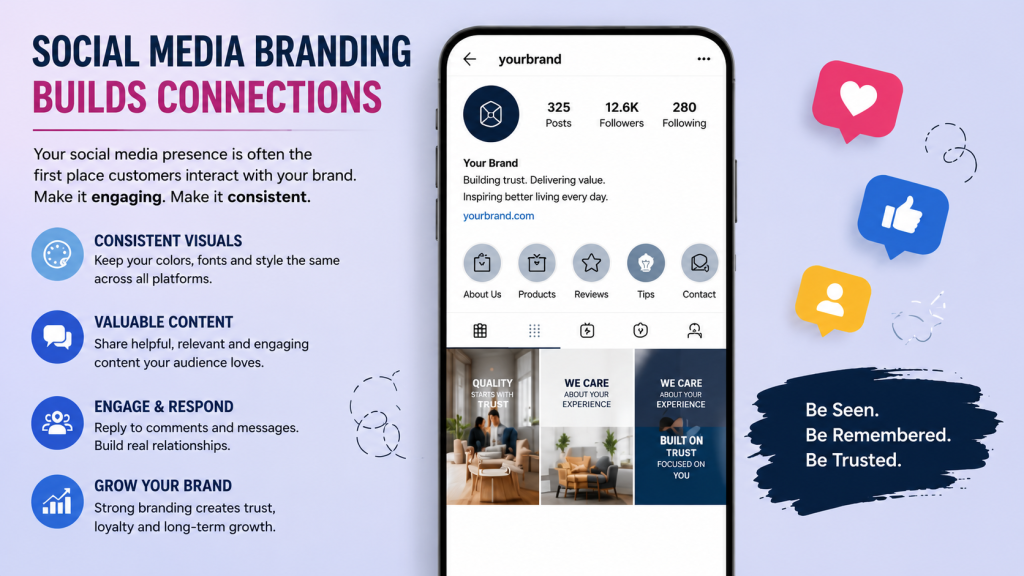
Social Media Branding Matters
Social media has become a major part of customer trust-building.
Customers often check:
- Instagram pages
- Facebook profiles
- LinkedIn accounts
- reviews and comments
before contacting businesses.
A professional social media presence must include:
- consistent visuals
- valuable content
- engaging captions
- audience interaction
- modern branding aesthetics
Accounts with poor branding or inconsistent posting often appear inactive or unreliable.
Businesses that maintain strong social media branding build stronger audience confidence.
Website Branding Improves User Trust
A website acts as the digital face of a business.
Poor website branding can immediately reduce trust.
Important branding elements for websites include:
- professional design
- fast loading speed
- mobile responsiveness
- clear navigation
- consistent visual identity
- quality content
Customers are more likely to trust businesses with clean and modern websites.
Professional branding also improves user experience and supports SEO performance.
Customer Experience is Part of Branding
Branding is not only visual. Customer experience builds brand reputation.
Positive customer experiences create:
- loyalty
- trust
- repeat purchases
- positive reviews
Businesses should focus on:
- fast communication
- helpful support
- transparency
- consistency
- professionalism
Every interaction influences how customers perceive the brand.
Strong customer service strengthens branding and improves overall business reputation.
Storytelling Builds Human Connection
People connect more with stories than advertisements.
Brand storytelling helps businesses:
- share their mission
- communicate values
- explain their journey
- create emotional connection
Businesses with authentic stories often feel more relatable and trustworthy.
Storytelling also helps brands appear more human instead of overly corporate.
This strengthens audience engagement and customer connection.
Online Reviews Strengthen Brand Trust
Customer reviews influence buying decisions heavily.
Positive reviews improve:
- credibility
- social proof
- customer confidence
- brand authority
Encouraging happy customers to leave reviews on:
- websites
- social media
helps businesses build stronger trust signals online.
Reviews act as public validation for brand quality and reliability.
Branding Creates Long-trusted Business Value
Branding is a long-term investment rather than a short-term marketing tactic.
Strong branding continues to benefit businesses through:
- customer loyalty
- increased recognition
- premium positioning
- repeat business
- stronger authority
Businesses with powerful brands often grow faster because trust reduces customer hesitation.
Customers naturally prefer businesses that appear professional, reliable, and recognizable.
Common Branding Mistakes Businesses Make
Many businesses weaken customer trust through:
- inconsistent branding
- outdated visuals
- poor communication
- weak social media presence
- unclear messaging
- low-quality websites
Copying competitors instead of building a unique identity is another common mistake.
Successful branding focuses on authenticity and consistency rather than trends alone.
Final Thoughts
Branding plays a major role in shaping customer trust, business reputation, and long-term growth. Businesses that invest in professional branding often build stronger audience relationships and create lasting impressions in competitive markets.
Understanding the Importance of Brand Identity helps businesses improve credibility, increase customer loyalty, and strengthen online visibility. From visual identity and storytelling to customer experience and social media presence, every branding element contributes to customer perception.
Businesses that focus on effective Business Branding Strategies and learn how to Build Customer Trust create stronger emotional connections with audiences and improve long-term success.
In today’s digital world, strong branding is not just about looking professional — it is about creating trust, recognition, and meaningful customer relationships that support sustainable business growth.
No responses yet