In today’s digital world, businesses and websites need visibility to attract customers online. This is where SEO for Beginners becomes extremely important. SEO, also known as Search Engine Optimization Basics, helps websites appear higher on Google search results and improves online visibility organically without relying completely on paid advertisements.
Understanding Beginner SEO Tips can help businesses, bloggers, freelancers, and website owners increase website traffic, build credibility, and reach the right audience. From content optimization to keyword strategy and website structure, learning how to improve Google Rankings is essential for long-term online growth and digital success.
What is SEO?
SEO stands for Search Engine Optimization. Its the process of improving a website so that search engines like Google can understand, index, and rank it more effectively.
The main goal of SEO is to:
- increase organic traffic
- improve visibility
- attract relevant audiences
- generate leads and conversions
- build online authority
When users search for information online, Google displays websites based on relevance, quality, and user experience. Websites with strong SEO are more likely to appear on the first page of search results.
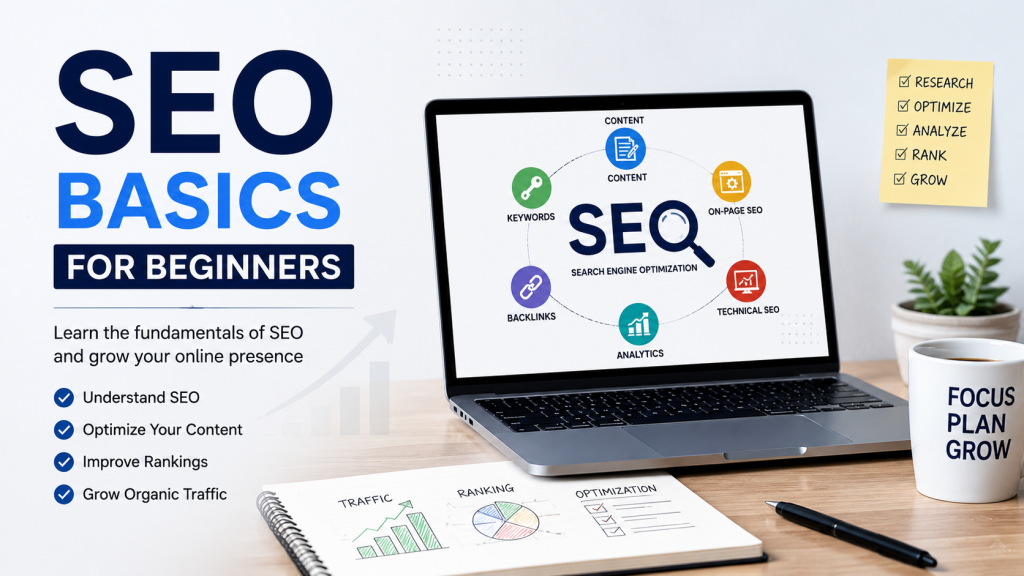
Why SEO Matters
Most online experiences begin with a Google search. Whether someone is searching for:
- restaurants
- digital marketing services
- recipes
- website designers
- local businesses
They usually click one of the top search results.
Good SEO helps businesses:
- reach more customers
- improve trust and credibility
- increase website traffic
- generate long-term visibility
- compete with larger brands
Unlike paid advertising, SEO continues delivering results over time when implemented correctly.
Understand How Search Engines Work
Search engines use automated systems called crawlers or bots to scan websites and collect information.
What Google focuses on depends on the following:
- content relevance
- website quality
- user experience
- mobile friendliness
- page speed
- backlinks
- keyword optimization
After analyzing websites, Google ranks pages based on which results best answer the user’s search query.
This is why creating valuable and optimized content is important.
Keyword Research is the Foundation
Keywords are the words or phrases usually users type into search engines.
Examples:
- SEO for Beginners
- Beginner SEO Tips
- How to Improve Google Rankings
- Website SEO Guide
- On-Page SEO Techniques
Keyword research helps identify what users are searching for online.
Good keyword strategies focus on:
- search intent
- relevance
- competition level
- audience needs
Long-tail keywords are better for smaller websites because they are less competitive and more targeted.
Example:
Instead of targeting:
- “SEO”
Target:
- “SEO Basics for Small Businesses”
- “Beginner SEO Guide”
- “SEO Tips for Websites”
These keywords are easier to rank for and attract more relevant audiences.

On-Page SEO Techniques
On-page SEO refers to optimizing content and website elements directly on a webpage.
Important On-Page SEO Techniques include:
Optimized Titles
Your title should:
- include the main keyword
- be clear and engaging
- encourage clicks
Example:
“SEO Basics for Beginners: Easy Ways to Improve Google Rankings”
Meta Descriptions
Meta descriptions summarize webpage content in search results.
A good meta description:
- includes keywords naturally
- explains the page clearly
- encourages users to click
Heading Structure
Use proper headings like:
- H1
- H2
- H3
This improves readability and helps Google understand content structure.
Keyword Placement
Place keywords naturally in:
- title
- first paragraph
- subheadings
- image alt text
- conclusion
Avoid keyword stuffing because it reduces readability and may hurt rankings.
Create High-Quality Content
Content quality is one of the most important ranking factors.
Google prefers content that:
- answers user questions
- provides value
- is easy to read
- stays relevant
- demonstrates expertise
Good SEO content should:
- Use short paragraphs
- include bullet points
- maintain readability
- solve problems clearly
Instead of writing only for search engines, focus on helping users first.
Mobile Optimization is Essential
Most users browse websites using smartphones. Google now prioritizes mobile-friendly websites when ranking pages.
A mobile-friendly website should:
- load quickly
- fit smaller screens properly
- have readable text
- avoid broken layouts
Poor mobile experience often increases bounce rates and lowers rankings.
Website Speed Affects Rankings
Slow websites create a poor user experience.
Common causes of slow websites:
- large images
- unnecessary plugins
- poor hosting
- unoptimized code
Improving speed helps:
- reduce bounce rate
- increase engagement
- improve user satisfaction
- support better rankings
Compressing images and using lightweight website designs can improve loading performance significantly.
Internal Linking Helps SEO
Internal linking means connecting pages within the same website.
Example:
A blog about SEO can link to:
- website design services
- content marketing articles
- digital marketing pages
Benefits of internal linking:
- improves website navigation
- increases page authority
- helps search engines crawl websites
- keeps users engaged longer
Strong internal linking improves overall website structure.
Image Optimization Matters
Images also contribute to SEO performance.
To optimize images:
- Rename files properly
- Use descriptive alt text
- compress image size
- Use the WebP format when possible
Example:
Instead of:IMG00382.jpg
Use:seo-basics-for-beginners.jpg
This helps search engines understand image content better.
User Experience Influences Rankings
Google wants users to have a positive browsing experience.
Important user experience factors include:
- readable layouts
- clear navigation
- mobile responsiveness
- fast loading speed
- useful content
Websites with poor user experience often struggle to maintain strong rankings.
SEO is no longer only technical optimization. User satisfaction now plays a major role.
Backlinks Build Website Authority
Backlinks are links from other websites pointing to your website.
Search engines view backlinks as trust signals.
High-quality backlinks can:
- improve domain authority
- increase rankings
- generate referral traffic
- improve credibility
However, quality matters more than quantity.
Spammy backlinks can damage SEO performance.
Local SEO for Businesses
Local SEO helps businesses appear in local searches.
Examples:
- digital marketer near me
- Best café in Kerala
- website designer in Thrissur
Important local SEO steps:
- Create a Google Business Profile
- collect customer reviews
- optimize location keywords
- maintain consistent business information
Local SEO is especially valuable for small businesses targeting nearby customers.
SEO Requires Consistency
One of the biggest misconceptions about SEO is expecting instant results.
SEO is a long-term strategy.
Strong rankings develop through:
- consistent content publishing
- optimization improvements
- audience engagement
- website updates
- authority building
Businesses that invest consistently in SEO usually see better long-term growth compared to short-term marketing approaches.
Common Beginner SEO Mistakes
Many beginners make avoidable SEO mistakes, such as:
- keyword stuffing
- copying content
- ignoring mobile optimization
- poor website structure
- low-quality backlinks
- weak content strategy
- slow website speed
Avoiding these mistakes helps build a stronger SEO foundation.
Use Analytics to Track Progress
SEO performance should be monitored regularly.
Useful tools include:
- Google Search Console
- Google Analytics
- keyword tracking tools
These tools help analyze:
- traffic growth
- ranking improvements
- audience behavior
- top-performing pages
Tracking performance helps improve future SEO strategies.
Final Thoughts
Learning SEO Basics for Beginners is one of the smartest investments for anyone building an online presence. From content optimization and keyword research to mobile responsiveness and website structure, SEO helps websites improve visibility and attract long-term organic traffic.
By understanding Search Engine Optimization Basics and applying effective On-Page SEO Techniques, businesses and creators can improve website performance and build stronger online authority.
SEO is not about manipulating search engines. It is about creating valuable, user-friendly experiences that help audiences find the information they need.
With consistency, strategy, and the right Beginner SEO Tips, businesses can steadily improve rankings, increase traffic, and achieve sustainable online growth over time.
No responses yet